
A reflection on how India’s everyday multilingual life may be quietly shaping the way millions of minds think.
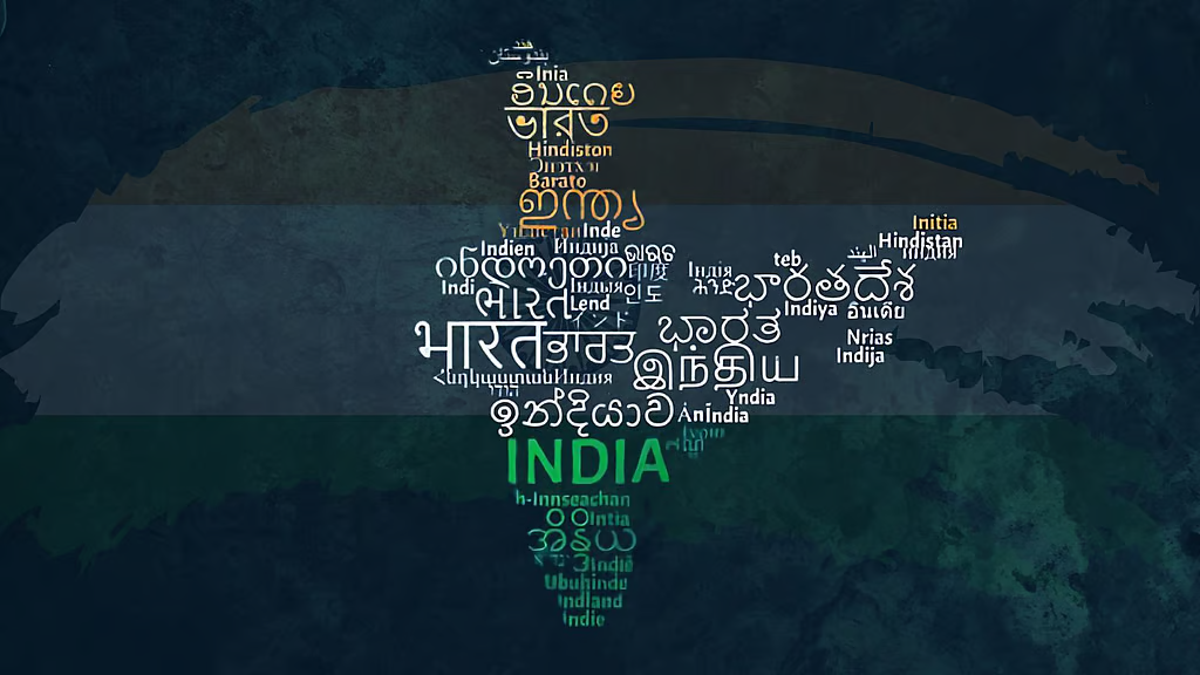
India’s everyday multilingual life may be doing more than helping people communicate. Cognitive psychology suggests it could be quietly strengthening the way millions of minds think.
Multilingualism in India is not an academic concept. It is an everyday reality lived by millions of people across homes, markets, schools, and workplaces.
Multilingualism in India refers to the everyday ability of people to understand or speak multiple languages as part of normal social life.
In many Indian homes, conversations move effortlessly between languages. A sentence may begin in one language and end in another. At work, one language is used; with neighbours, another; and with family, yet another.
While studying cognitive psychology, I began to see this everyday experience differently. What we often treat as a political problem may actually be one of our quiet intellectual strengths.
India frequently finds itself returning to heated debates about language. Should Hindi be compulsory? Is English overshadowing regional languages? Should schools reduce the number of languages children learn?
These discussions usually revolve around politics, identity, and cultural pride. But there is another question that rarely enters the debate:
What if India’s multilingual society is actually strengthening the way millions of minds think?
According to the People’s Linguistic Survey of India, more than 780 languages are spoken across the country. The Indian Census records hundreds of mother tongues used by communities across regions.
For millions of Indians, switching between languages is simply part of daily life.
In many homes, markets, offices, and classrooms across the country, conversations move fluidly between languages without anyone consciously noticing the mental coordination involved.
Language Learning in Indian Schools
India’s education system has historically followed what is known as the three-language formula, introduced in the 1960s to balance national integration with linguistic diversity.
Although implementation varies across states and school boards, the general structure often looks like this:
- Early schooling (ages 3–6): learning begins in the mother tongue or regional language, which research shows helps early comprehension and cognitive development.
- Primary school (ages 6–8): English is introduced in many schools as a second language.
- Upper primary (ages 8–10): a third language is introduced, which may be Hindi or another Indian language depending on the region.
As a result, many Indian children grow up learning two or three languages during their formative years.
Yet public debates often frame multilingual education as a burden rather than the advantage it may actually be.
This everyday exposure to multiple languages forms the early foundation of multilingualism in India, shaping how many children learn to think and communicate.
What Cognitive Psychology Reveals About Language
Cognitive psychology studies how humans perceive, process, and organise information. Language plays a central role in these processes because it is the primary system through which humans represent and communicate knowledge.
Language is therefore not just a communication tool. It is deeply connected to how the mind organises thought and stores information.
When individuals speak more than one language, the brain must constantly manage multiple linguistic systems. This involves several mental operations:
- selecting the correct vocabulary
- suppressing the other language
- switching between grammatical structures
- interpreting context depending on the listener.
Psychologists describe these processes as part of the brain’s executive control system, the same system involved in planning, reasoning, and problem solving.
Research by cognitive psychologist Ellen Bialystok has shown that people who speak two or more languages often demonstrate stronger abilities than monolingual speakers in areas such as:
- attention control
- cognitive flexibility
- task switching.
Managing multiple languages acts as a form of continuous mental training.
In another widely cited study, Bialystok and her colleagues found that bilingual individuals tend to show symptoms of dementia four to five years later on average than monolingual individuals. Researchers attribute this to stronger cognitive reserve developed through lifelong language management.
A Simple Illustration
Consider two children growing up in different environments.
One child grows up speaking only one language at home and school.
Another child grows up speaking a regional language at home, learning English in school, and understanding another Indian language through media or community interactions.
The second child’s brain regularly performs complex mental operations — switching languages, selecting appropriate words, and interpreting meaning across linguistic systems.
Over time, this repeated mental exercise strengthens cognitive flexibility and attention control.
This does not mean multilingual individuals are inherently more intelligent. Rather, their brains become more practiced at managing complexity.
Contextual Intelligence in Multilingual Societies
Multilingual environments also encourage what psychologists call contextual intelligence — the ability to read situations, adapt behaviour, and interpret meaning depending on the social context.
Psychologist Robert Sternberg, in his Triarchic Theory of Intelligence, describes a form of intelligence called practical intelligence, which involves adapting effectively to real-world environments.
In multilingual societies like India, people constantly adjust communication depending on:
- who they are speaking to
- the social situation
- cultural expectations
- the language comfort of the listener.
A person may speak one language at home, another at work, and yet another while interacting with people from different regions.
But the adjustment is not only linguistic. The speaker also adapts tone, vocabulary, politeness, and cultural references.
The brain is continuously analysing context and selecting the most appropriate way to communicate.
Over time, this strengthens situational awareness and adaptive thinking.
Everyday Cognitive Flexibility
Consider a common scene in many Indian cities.
A shopkeeper may speak the local language with neighbours, switch to English with visitors, and use another Indian language with travellers from elsewhere.
Within seconds, the brain performs multiple cognitive operations:
- identifying where the customer may be from
- selecting the appropriate language
- adjusting tone and vocabulary
- interpreting social cues.
Scenes like this are not unusual; they reflect the lived reality of multilingualism in India, where switching between languages becomes a natural part of daily communication.
Many Indians also engage in what linguists call code-switching, where multiple languages appear within the same sentence.
For example:
“Auto anna, station varuma? I am getting late for a meeting.”

In this single sentence, the brain coordinates different linguistic systems while maintaining coherent communication.
Psycholinguists recognise code-switching as a sophisticated cognitive skill that requires the brain to manage multiple language networks simultaneously.
Understanding Multilingualism in India Through Cognitive Psychology
While studying cognitive psychology, I began to notice how theoretical ideas suddenly connected with everyday life in India.
Learning about language and cognition made me reflect on our own society. Millions of Indians grow up performing the very cognitive operations psychologists study in laboratories — switching languages, interpreting social context, and adapting communication depending on the situation.
Studying cognitive psychology has also shown me how learning deepens when theory connects with lived experience. Concepts about language, cognition, and information processing begin to make sense when we observe how people communicate around us in everyday life.
What might appear to outsiders as linguistic chaos may in fact be a remarkable cognitive environment.
Rethinking the Language Debate
Language pride is natural. Every language carries history, literature, and identity. Protecting and nurturing regional languages is therefore important.
But when language debates become rigid battles about which language should dominate, we may overlook a larger truth.
India’s linguistic diversity surrounds us every day, yet we rarely pause to recognise the cognitive richness it brings into our lives.
Instead of seeing our many languages as a source of division, we might begin to see them as one of the quiet strengths of our society.
We may have become so accustomed to living with many languages that we rarely pause to recognise how extraordinary this environment is. In many parts of the world, multilingualism must be deliberately taught in classrooms. In India, it often grows naturally through family, neighbourhood, and everyday interaction.
This may be one of India’s greatest intellectual advantages — the ability of millions of people to think, interpret, and communicate across languages every single day.
Public debates about language often focus on politics and policy. But cognitive psychology invites us to look at another dimension — how living with multiple languages may shape the way we think.
References
- Bialystok, E. (2001). Bilingualism in Development.
- Cummins, J. (1976). Linguistic Interdependence and Educational Development.
- Grosjean, F. (1982). Life with Two Languages.
Author‘s Note

Manju Hinduja is currently pursuing her Master’s in Psychology and writes across themes of human behaviour, emotional clarity, art, and self discovery. Her work invites readers to explore the deeper layers of everyday life.
Writer • Artist • Observer of Human Behaviour
© Copyright Notice
© 2026 Manju Hinduja. All rights reserved.
Please do not reproduce the article without permission.
Short excerpts may be shared with credit and a link to the original post.
⚖️Disclaimer
Note: This article reflects personal reflections while studying cognitive psychology and is intended to encourage thoughtful discussion on language and society.