Some journeys begin with a plan; others begin with a feeling.
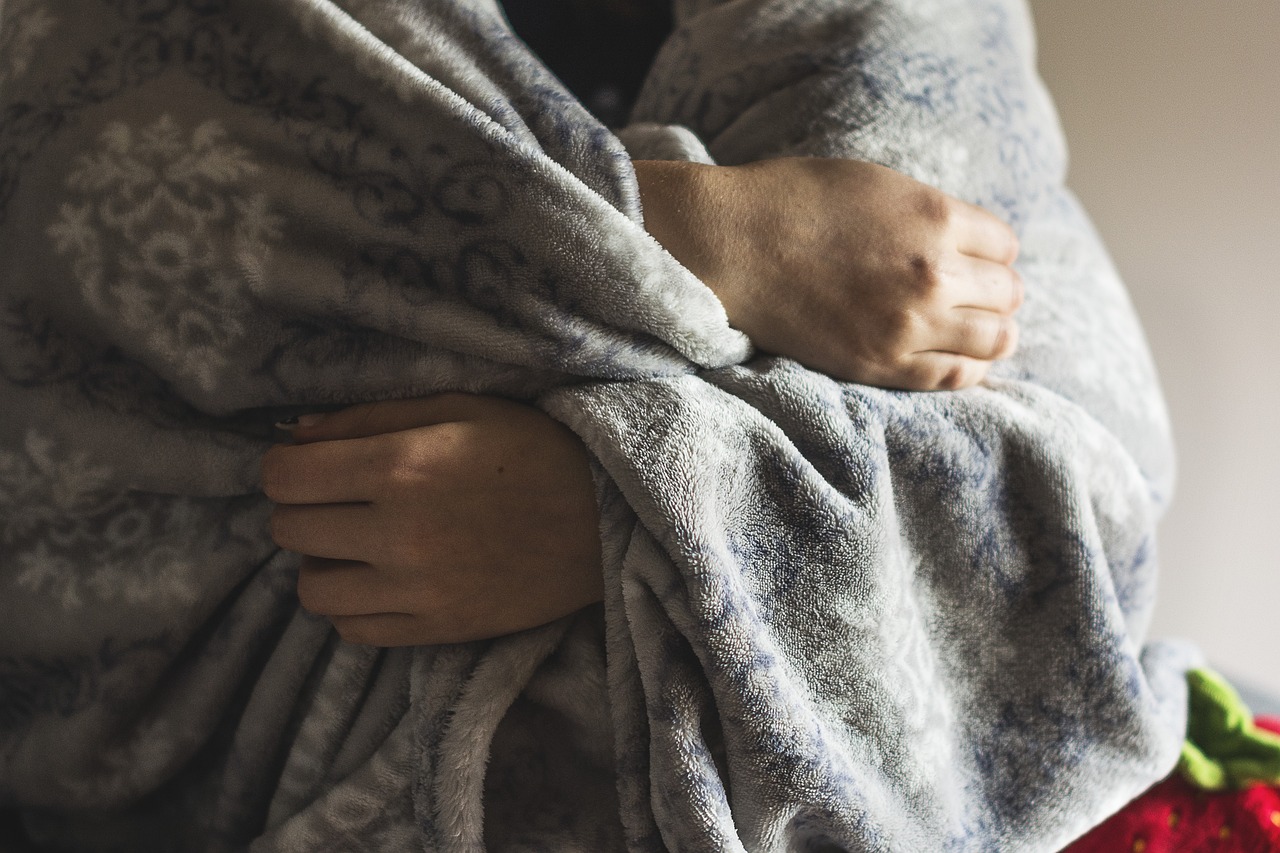
This one began with a bundle of blankets — and a calling I couldn’t name.
In the winter chill of Dinajpur, I learned that warmth is not just something we give; sometimes it’s something we find — in strangers, in silence, and in moments that change the way we see the world.
All of us in Bangladesh were closer to one another than I am now to my neighbour next door.
Irony of life — or perhaps that is simply how life works.
One winter, our Indian community in Bangladesh came together generously to contribute warm blankets for the underprivileged. I volunteered to take a portion of these blankets to Dinajpur, travelling alone -accompanied only by my Bangladeshi team members who had connections there and helped coordinate the distribution.
But only when we reached did I realise that the boys belonged to the opposition party and had their own political agendas. Still, they were good at heart, and that was enough for me.
Although I had no idea how much this journey would test my courage, faith, and emotional resilience.
This is one such memory I have quietly carried for years.
The Night We Reached Dinajpur
We took a bus from Dhaka and arrived late that night — the cold sharp and unforgiving.
None of the hotels would accommodate me — first because I was Indian, and second because I was a woman travelling alone into a small village. The boys tried their best, but without success.
I could sense an undercurrent of communal tension — unspoken but heavy in the air. It worried me. I pleaded with them to take me into the Hindu locality, where I might at least be accepted. They hesitated, but after eight hotels turned us away, they had no choice.
Finally one of them said,
“Let’s go to Hindu Street (that was how the boys called it due to densely populated with Hindu Community). Arun Dada runs a hotel there.”
They made a call, and Dada spoke to me himself.
“Sister, don’t worry,” he said gently. “Come and stay with us.”
The warmth in his voice felt like shelter even before we reached.
Relief washed over me.
It was a small, new hotel — simple, safe, without a kitchen. So the next morning, I walked down the street searching for breakfast and my much-needed morning coffee.
I stepped into a tiny coffee shop, ordered, and as I reached for my purse, someone called out from the back:
“Dada, she’s Arun Dada’s guest — please don’t take money from her!”
The same thing happened later at Hare Krishna Hotel.
The warmth was overwhelming, though I insisted on paying my dues.
A Knot in My Heart & A Sadhu in the Cold
That evening we set out again, ready to distribute the blankets.
I had one condition: ten percent must go to the Hindus.
The boys were uncomfortable. They tried to reason with me, but I stood firm.
A tight knot had formed in my heart — an ache I couldn’t explain — as though some unseen force was guiding me.
We began at the government hospital.
Its large compound looked deserted except for one person sleeping on the ground — wrapped in thin rags, surrounded by a dozen puppies hidden beneath his blanket for warmth.
I walked quietly, tiptoeing so as not to disturb him, and gently tried to spread the blankets over him.
I did not know the puppies were under there, nor did I know he was a sadhu.
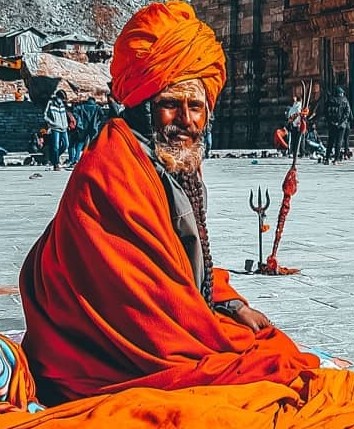
Naturally, the puppies smelled me and stirred first, tumbling out with soft yelps — and their movement woke him.
And there he was — a saffron-clad sadhu, rudraksha beads around his hair and arms, eyes serene and compassionate.
My greeting came naturally:
“Jai Shree Ram.”
He smiled — calm, kind.
At that moment, a little boy ran from the hospital corridor, calling out with joy:
“Ram Babu! Ram Babu! Blanket paisee!”
My heart swelled.
The knot inside me loosened.
A quiet peace settled over everything.
I turned to the boys and said softly:
“Now it doesn’t matter who we give the blankets to. Let’s just give them to those who need them.”
They couldn’t understand the shift in me, but I had found what I unknowingly came looking for — a sign, a blessing, perhaps both.
Through Narrow Lanes & Uncomfortable Silences
We walked miles that night, along narrow lanes the car couldn’t enter, handing blankets to anyone who needed warmth.
Then we reached another area — densely populated with minorities.
The boys stopped. They refused to go further in.
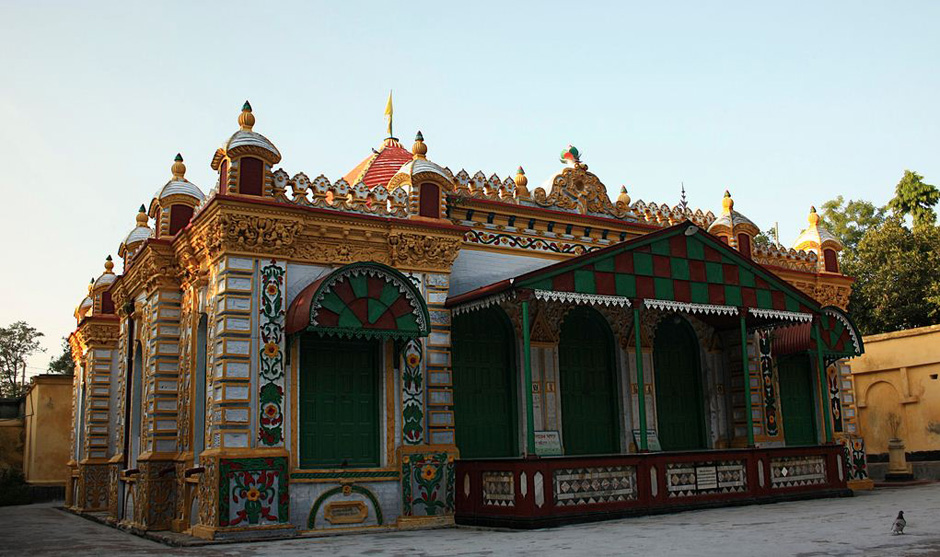
I handed a few blankets to people sitting outside the temple in Rajbari and moved on.
Later they suggested visiting a few orphanages near the border.
But when we arrived, I realised they were madrasas.
Each housed eighty to a hundred-and-fifty boys, ages eight to sixteen — innocent faces, curious eyes — growing up beside the border where gunshots and smuggling were simply part of life.
And it struck me:
When children grow up hearing that the men across the fence are their enemies…
when they see firing at night and are told, “those are Indians”…
how easily fear becomes hatred.
No speeches needed.
No lessons required.
Just an environment that whispers poison into young hearts.
How do we help children unlearn that?
How do we clear inherited bitterness?
Those questions have stayed with me.
Part II — The Woman Under the Tree
We continued distributing blankets late into the night.
As we walked through narrow lanes, the boys pointed out a large haveli belonging to a local politician, casually discussing his reputation in the area.
Hot cups of tea were frequent and always welcome in that bitter cold.
And every tea vendor, upon learning we were helping the poor, refused to take money.
Their generosity touched me, though we insisted they accept payment.
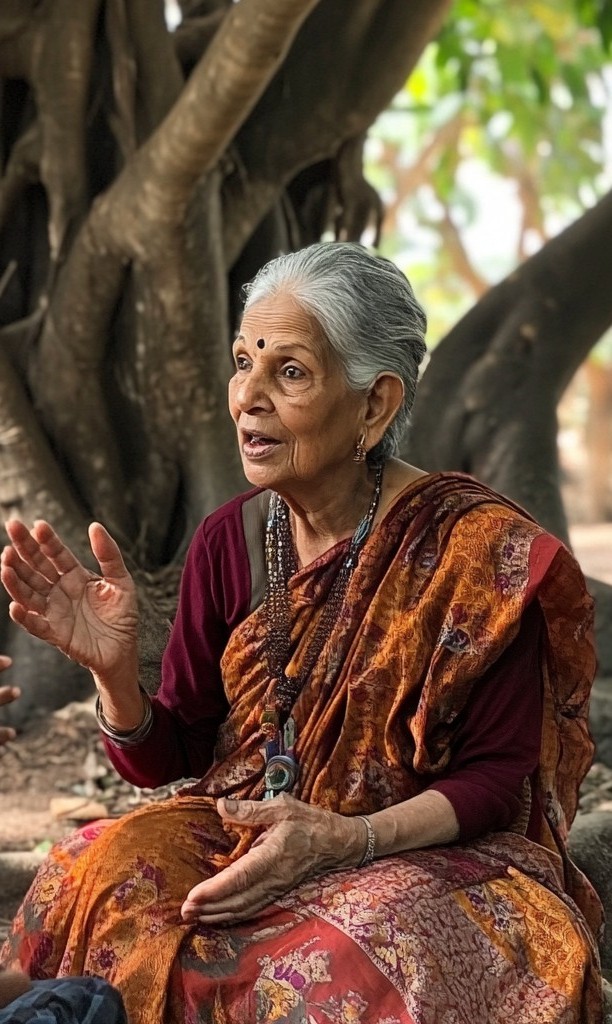
Among the people who came forward for the blankets, one elderly woman caught my eye.
There was strength in her walk, but her eyes carried a quiet sadness.
She accepted the blanket with grace and sat under a nearby tree.
One of the boys leaned toward me and said softly:
“She is the mother of the local politician who lives in that large haveli.”
After a pause, he added:
“When her husband passed away… she was left on her own.”
His words settled heavily in the cold night air.
I felt something tighten inside me.
Whatever the circumstances may have been,
no parent should find themselves abandoned in their old age.
Caring for them is not charity — it is dharma.
A chill ran through me — not from the weather, but from the story.
The Last Blankets & the Return to Dhaka
We were nearing the end of our rounds when a group of boys from the ruling party stopped us.
They insisted we visit their area next.
We agreed — honestly, we didn’t have much of a choice, judging by their body language.
We finished with about ten or fifteen blankets remaining.
Back at Arun Dada’s hotel, I met a gentleman who introduced himself as a Rajput — dignified, confident, carrying that effortless Rajputana grace.
He told me he knew a few elders in his community who needed blankets.
I asked the boys to hand the remaining ones to him.
But as I travelled back to Dhaka the next morning, my thoughts stayed with the mother under the tree.
Life is not always fair.
Some wounds remain invisible beneath layers of family pride and political power.
The following winter, I received another request from Dinajpur.
I reached out to our Indian community again — and as always, their response was abundant.
I divided the blankets into two equal parts:
— one half for Arun Dada and the Rajput gentleman to distribute,
— the other half for the same boys who had once taken me through the villages.
And that night taught me something:
We cannot control how others live, but we can choose how we give.
Dinajpur didn’t just teach me about charity.
It taught me about grace, faith, and boundaries —
and that blessings often arrive wrapped in silence, not gratitude.
DHAKA — WHEN COMPASSION COLLIDED WITH CHAOS
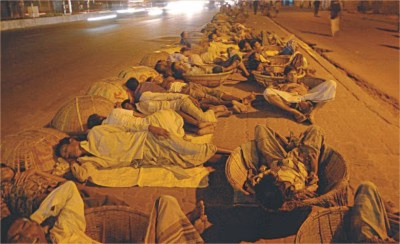
Dhaka was a different world — intense, unpredictable, crowded.
We went out late at night to distribute blankets at the railway station, accompanied by a special police squad for safety.
The moment we stepped out, the cold cement floors were filled with hundreds of homeless people seeking warmth.
We began distributing.
And within seconds, chaos broke loose.
People surged forward, desperate not to be left out.
Arms pulling, tugging, reaching…
We wanted to give peacefully.
But cold and poverty don’t understand order.
Blankets vanished from our hands in minutes.
THE BOY WHO DIDN’T GET ONE
Amid that chaos, I saw a young boy — maybe fourteen — trying his best to reach us.
He was pushed back again and again.
When the blankets finished, we had nothing left.
We walked toward the jeep.
But the boy followed us, shouting:
“Give me! One please!”
He ran beside the moving vehicle. Then, out of pure desperation, he grabbed the side-view mirror — holding on even as the jeep gained speed.
The policeman said,
“Finished! Nothing left!”
But the child wouldn’t let go.
Finally the officer pried his fingers loose.
The boy fell — rolling onto the street.
I froze.
Was I here to help…
or had I ended up hurting someone who needed help the most?
Dhaka taught me what Dinajpur didn’t:
Sometimes compassion is helpless.
Sometimes kindness is not enough.
And sometimes doing good can look and feel very different from what we imagined.If this reflection stayed with you, the comment space is open below.
AUTHOR’S NOTE

Stories like this stay tucked away in the heart for years — until one day they find their own time to be told.
I’ve carried this experience from Bangladesh not as a tale of charity, but as a quiet reminder of how faith, kindness, & humanity often appear where we least expect them. This is not about borders or belief — it’s about the small ways grace finds us when we choose to see people simply as people.
Names and identifying details have been changed for safety.
These reflections are personal — emotional, human, spiritual.
They are not political or religious commentary.
You can explore more reflections like this under my Reflections section.
DISCLAIMER
The views shared here are based solely on personal experience and memory.
They are not intended to generalize, judge, or influence political or religious sentiment.
Any resemblance to real persons or institutions is coincidental.
This content is shared only for storytelling and reflection.
COPYRIGHT & USE POLICY
All content in this post — including narrative, reflections, and personal experiences — is my original writing.
Please do not copy, reproduce, or republish any part of this story without my written permission.
You are welcome to share the link to this post if you wish to reference it.
Image Credits
Featured Image:
Image by Katrina_S from Pixabay
(https://pixabay.com/photos/cold-frost-winter-illness-blanket-2722002/)
Sadhu Image:
Source: High on Travel – Kedarnath Temple post on Tumblr
(https://www.tumblr.com/hinducosmos/634557132950405121/kedarnath-temple-uttarakhand-high-on-travell)
Elderly Woman Image:
Image by StockCake – Elderly Storyteller
(https://stockcake.com/i/elderly-storyteller-speaking_1396301_981334)
Rajar Bari Image:
(Source unclear – used under assumption of being royalty-free. If the image is later identified as copyrighted, it will be removed.)